
A founder can validate a real problem and build something people will pay for — and still not be ready for the capital that would let the business grow.
That sounds obvious once you say it plainly. But it took a conversation with an institutional investor earlier this week for me to really sit with what it means, and what it would take to close.
Since we started, Africa 2100’s focus has been on one side of the founder’s journey: helping entrepreneurs validate a real problem and build with independence — not permission-seeking, not dependency. That work matters, and it’s working.
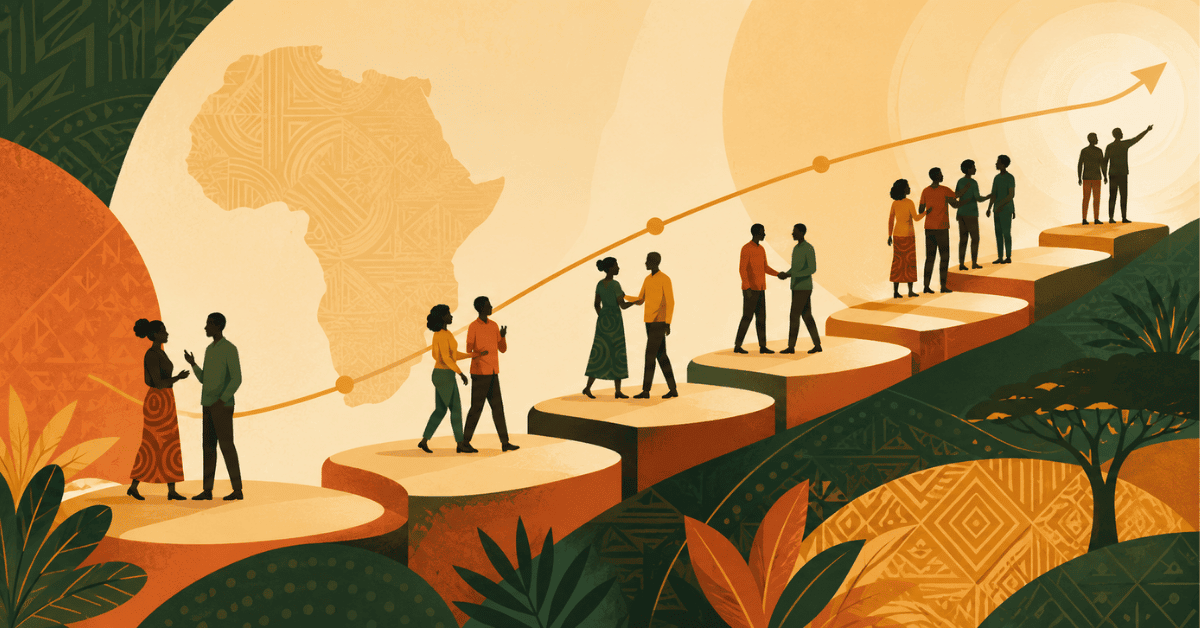
But this conversation was a reminder that there’s a second half to that journey, and we haven’t been building for it. It’s the gap between a founder who has proven a problem is real, and a business that’s actually ready to take on growth capital — call it the missing middle. Too many African founders who reach the first place never make it to the second — and the investor’s frustration wasn’t with the founders themselves. It was with how few of them ever get properly prepared for what comes next.
What Investors Are Actually Dealing With
Strip away the diplomatic language, and what struck me wasn’t any single complaint. It was how many different forms of friction sit between capital and a founder who could actually put it to productive use.
The capital itself is expensive before a single dollar reaches a founder. Most of it originates in the Global North, and currency volatility on the way in — and, eventually, on the way back out — adds real cost that has nothing to do with the business itself.
The venture model is a hard one to explain and an even harder one to live inside of. A handful of portfolio companies have to perform extraordinarily well to cover the rest that won’t. That’s one of the realities of venture economics, not a flaw unique to African markets — a small number of exceptional outcomes have to carry the portfolio. But it means an investor is making a bet on a handful of businesses reaching escape velocity, not on everyone doing fine.
Then there’s the operating relationship after the check is written. It tends to hold up fine when things are going well, and again when things are going badly enough that a founder clearly needs help. The hardest period may actually be neither of those. It’s the quiet middle — when a business is drifting off plan, but not yet far enough off course to trigger an obvious intervention. That’s where investors described founders going quiet. Less reporting. Less transparency about what’s actually happening operationally. An instinct to handle it alone rather than loop in the people who backed them.
The more I sat with that, the more I don’t think it’s really a communication problem. It’s the absence of operating systems that would make a problem visible early enough to act on — before it becomes a crisis big enough that everyone notices anyway.
And underneath all of it is a structural tension: the capital an African founder needs mostly comes from outside the continent, and the returns on that capital mostly have to leave the continent too. Which means even when the model works exactly as designed, it can work against the goal a lot of us actually care about — building wealth that stays local.
None of this is a story about founders lacking ambition or ideas. It’s a story about the systems around a business — and how few of them exist yet.
The Capability Gaps Are Really Infrastructure Gaps
The list of what investors say they’re missing when they look at African-led businesses is specific, not vague: real hiring and people-management practices. Accountability structures. Financial controls and data quality good enough to trust. Governance. OKRs. The operational systems that make a business model actually run, rather than run on the founder’s memory. Real-time visibility into what’s happening, instead of a status update reconstructed after the fact.
It would be easy to read that list as a verdict on talent. We don’t think that’s what it is, and it’s not how we think about founders in our own programs. It’s a systems gap, not a people gap — which is exactly the distinction Africa 2100 was built on. We’ve never believed Africa lacks entrepreneurial talent. We’ve believed it lacks the infrastructure that lets that talent become trusted, investable, and scalable. This is that same thesis showing up in a harder room, with more money on the table.
That’s also, probably, the clearest way to define what “investment readiness” actually means. It isn’t a pitch deck, a financial model, or a compelling story — most founders who get this far already have those. It’s the underlying business systems that let an investor understand what’s happening, assess risk, see problems early, and believe the company can operate beyond the founder’s direct oversight. The missing middle isn’t where founders learn to pitch. It’s where businesses learn to become investable.
We’re already seeing early versions of this in our own program data — founders who are strong on curiosity and resilience, and who need real, deliberate work on business strategy and the operating discipline that governance and data systems require. That’s not a knock on them. It’s exactly the gap a program is supposed to close.
Why the Gap Matters Beyond Any One Founder
Here’s the part of the investor’s frustration that should concern all of us, not just the founders directly affected by it: general partners don’t have the time or mandate to build a pipeline of investment-ready founders themselves. That’s not their job, and expecting it to become their job isn’t realistic.
So when a pipeline of genuinely investment-ready, locally led businesses doesn’t exist, capital is naturally more likely to flow toward businesses that are easier to underwrite — including businesses with stronger institutional infrastructure or leadership structures more familiar to the investor. If that pattern persists, it can reinforce the perception that locally led businesses are harder to evaluate or support, even when the underlying entrepreneurial potential is there. And every cycle that plays out that way makes the next locally-led business a little harder to get a fair look at.
That’s the part that reframes this for us. This isn’t only a founder problem or an investor problem. It’s a missing piece of infrastructure sitting between two sides of the market that both want the same outcome and can’t reliably find each other.
Where This Leaves Us
There’s an uncomfortable implication in here for Africa 2100 too. We’ve spent the last two years getting better at helping founders become ready to build. We haven’t yet built the equivalent pathway for helping those businesses become ready to be responsibly financed. That’s not a failure of the first model. It’s the natural edge of the next one.
I don’t have a program to announce here. What I have is a clearer picture of a gap we haven’t deliberately built for — the space between “this founder has proven something real” and “this business is ready for growth capital” — and a conviction, sharpened by this week’s conversation, that it’s the next serious test of what we set out to do.
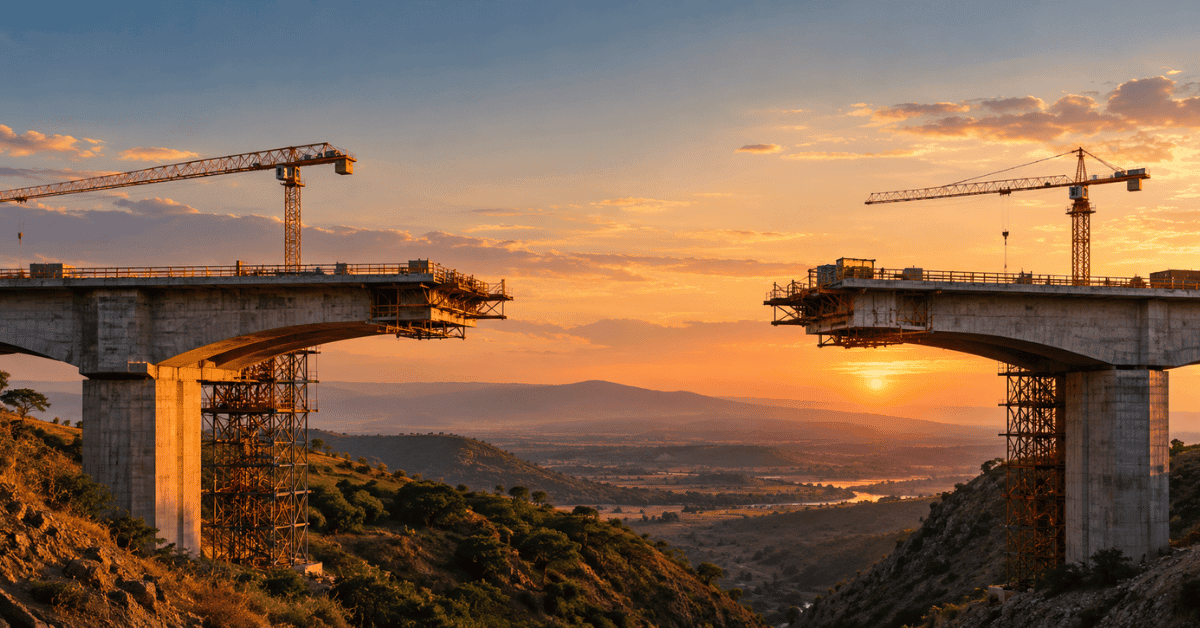
We know how to build the first half of that bridge. We’ve been doing it for two years. The honest next question is what it takes to build the second half — and whether the same trust-infrastructure thinking that’s shaped founder readiness can be pointed at investment readiness too.
If you’re a founder who has crossed — or struggled to cross — that gap, an investor who sees it from the other side, or an ecosystem builder working somewhere in between, we’d like to hear what you’re seeing.
This isn’t a program announcement. It’s a question we’re beginning to work on in public.
Join the movement-follow us