

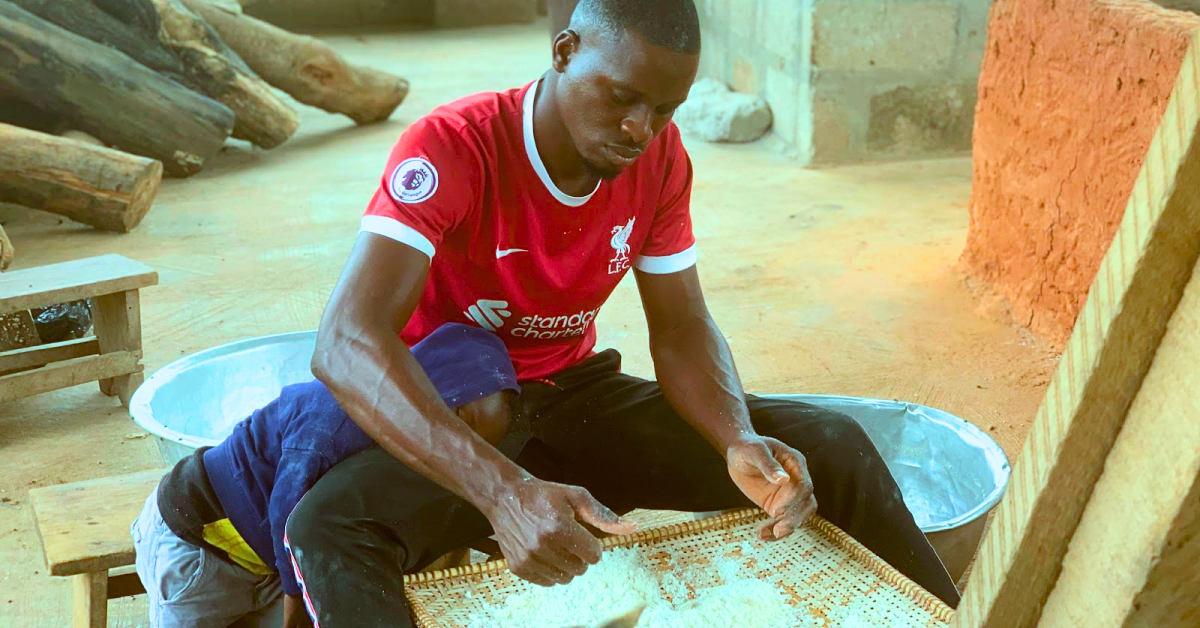
For five years, Progal Agro Processing Ltd has been producing gari — adding value to locally grown cassava, supporting farmers, and contributing to food security in our community.
But in December 2025, our journey reached a defining milestone.
We were awarded a contract to supply 10 tons of gari to CAMFED Ghana, a non-governmental organization supporting female students across the country. This wasn’t just another sale.
It was proof that a small-scale processor could meet institutional supply standards.
The Opportunity Was Intentional
The contract didn’t happen by chance.
I make it a priority to introduce my business to schools, vendors, community groups, and organizations in our area — clearly communicating:
- What we produce
- Our production capacity
- The quality standards we maintain
Through one of these conversations, I learned that CAMFED works with suppliers to provide food items to beneficiaries under their bursary program. I immediately expressed interest and asked how to join their supplier list.
For four months, we followed up, made inquiries, and prepared our documentation in advance. When applications opened on November 22, 2024, we were ready. By December 12, we had submitted all required documents — including our business profile, registration certificates, account confirmation, and client history.
Preparation positioned us to act quickly.
On August 11, 2025, we were confirmed as an official supplier.
Execution: Planning Meets Discipline
Winning the contract was one thing. Delivering successfully was another.
We immediately assessed stock levels and estimated additional production needs. Because we had already prepared for a previous contract we lost, early sourcing strategies were already in place.
When confirmation came, we simply executed the plan.
To avoid shortages and price fluctuations, we collaborated with trusted competitors to secure additional stock. Quality remained non-negotiable — especially since the gari was intended for students. We maintained strict hygiene standards and conducted quality checks on all sourced products.
CAMFED required clean, well-sealed packaging suitable for storage and distribution. We secured sufficient packaging materials and ensured each bag was properly filled and sealed.
Although we committed to deliver within four weeks of receiving initial payment, we completed deliveries by the third week.
The handover process was smooth because expectations had been clearly discussed before production began.
Key Takeaways
1. Visibility and Networking Matter
Opportunities often come from simply letting people know what you do and what you can supply. Feedback from our network helped us restructure our invoices — a critical factor in eventually winning the contract.
2. Proper Planning Is Critical
Bulk supply requires early sourcing and structured production scheduling. Because we had prepared for a previous contract, we were operationally ready when this one came through.
3. Quality Builds Trust
Clean, well-processed gari increases the likelihood of repeat business and referrals. We approached this contract as if it must qualify us for the next one — and never compromised on quality.
4. Professional Communication Improves Credibility
Prompt responses to requests for quotations and information created a strong impression. Professional invoices, quotations, and documentation enabled us to compete effectively — something many startups overlook.
A Milestone That Changes the Trajectory
Supplying 10 tons of gari to students through CAMFED Ghana is a major milestone in my journey.
It demonstrates that small-scale local processors can meet institutional and organizational supply standards — when we plan well, communicate professionally, and maintain uncompromising quality.
This experience has strengthened my confidence to pursue similar partnerships and continue growing Progal Agro Processing Ltd as a reliable supplier within — and beyond — Ghana’s food value chain.
Sometimes, the breakthrough doesn’t come from being the biggest.
It comes from being prepared, persistent, and professional.
By Ali Issah
Inspired by this story? Help us do more.
Support Africa 2100 by making a donation today